AI at work, without the risk theater
Whole-company or department teams
What your people are already doing with AI tools, what actually creates exposure, and the small number of habits worth enforcing.
Teaching
I help people without a technical background achieve real, working knowledge of AI and cybersecurity by teaching, speaking, and writing in plain language — in English and Spanish — because jargon shouldn't be the price of admission to safety.
Graduate course
UNLV · MS Cybersecurity program · designed and taught by Victor
I built this course because the convergence of AI and security was being taught as two separate subjects stapled together. It isn't. Students work through how AI systems are actually deployed inside organizations, where the real failure modes live, and how to evaluate a claim without needing to trust the person making it.
Graduate students arrive from very different starting points — some engineers, some analysts, some career changers. The course is deliberately built so that the person with the least background can still do the work, and the person with the most is still challenged by it.
Shorter formats for organizations and communities. Each one gets rebuilt around what the group actually does all day.
Whole-company or department teams
What your people are already doing with AI tools, what actually creates exposure, and the small number of habits worth enforcing.
Executives, boards, nonprofit leadership
Enough real understanding to ask better questions of your vendors and your own team — no acronyms required.
Public libraries, civic groups, families
The free public-library program I founded, delivered for adults with no technical background. Available in Spanish.
In the field
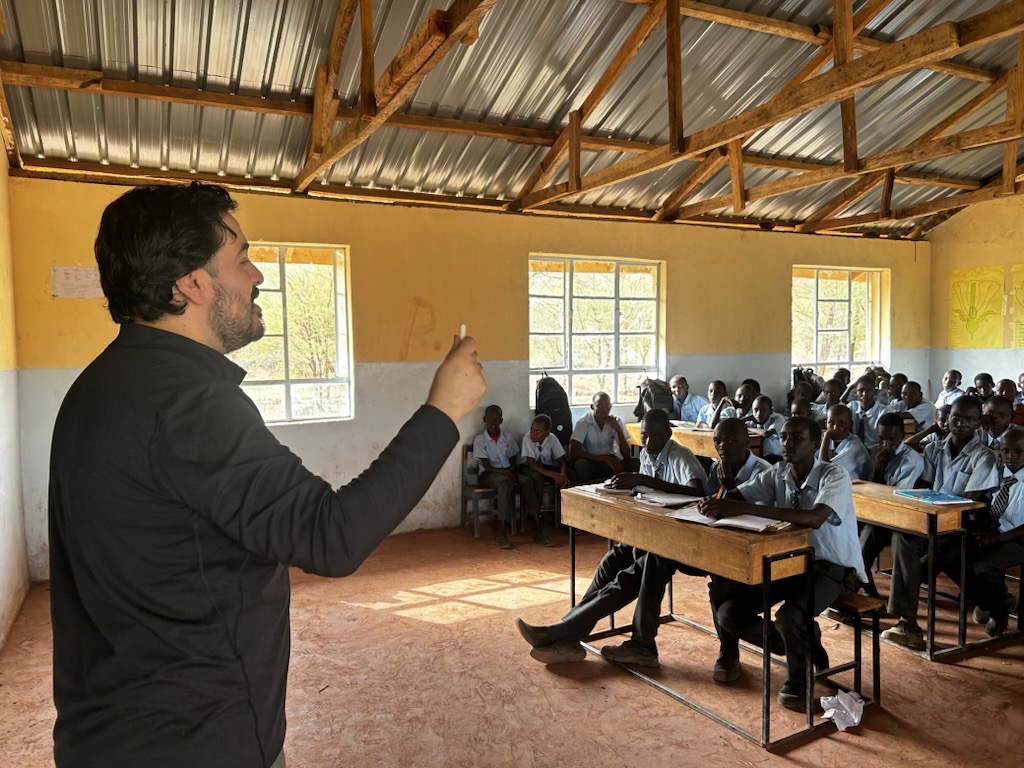
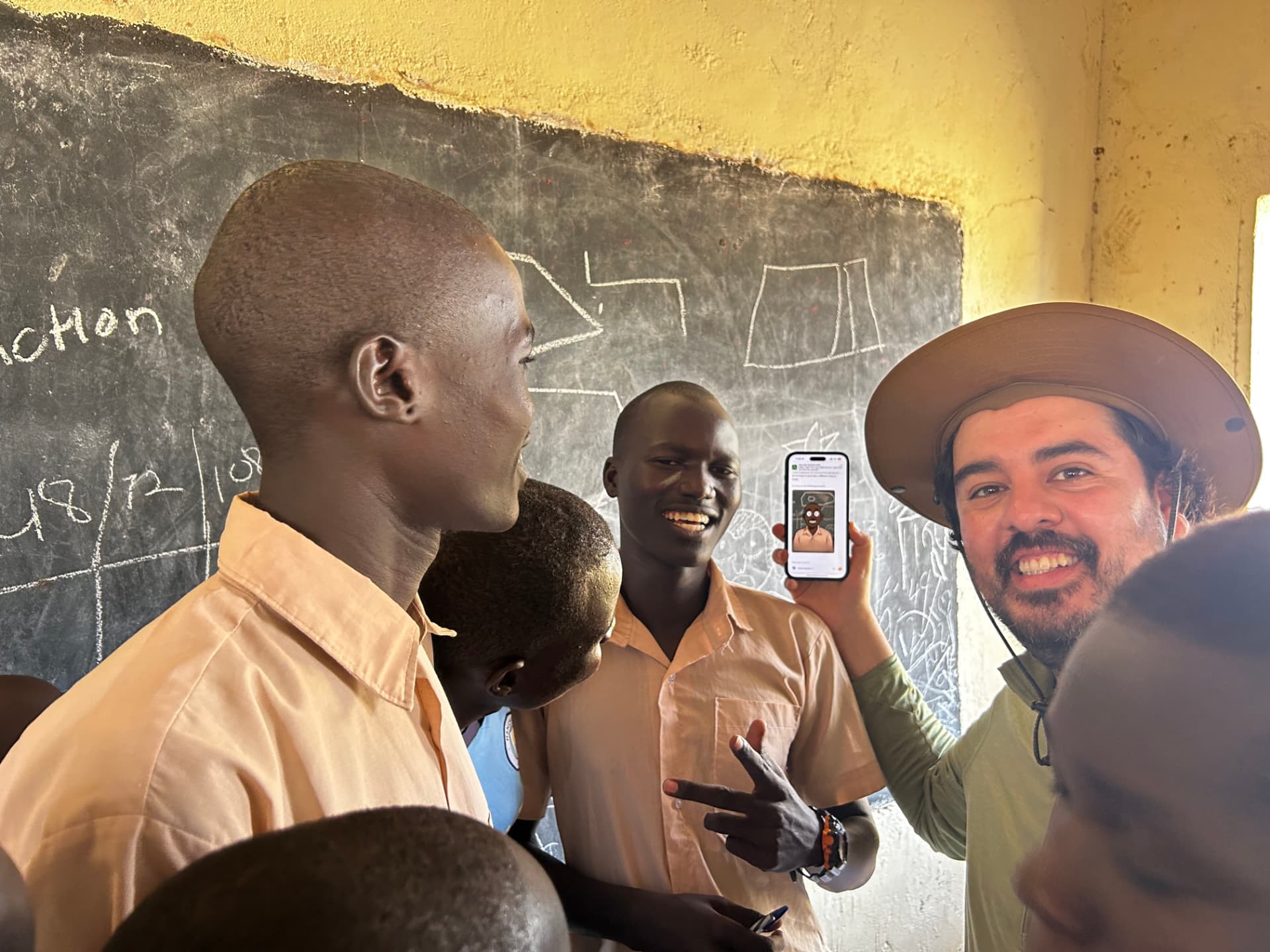
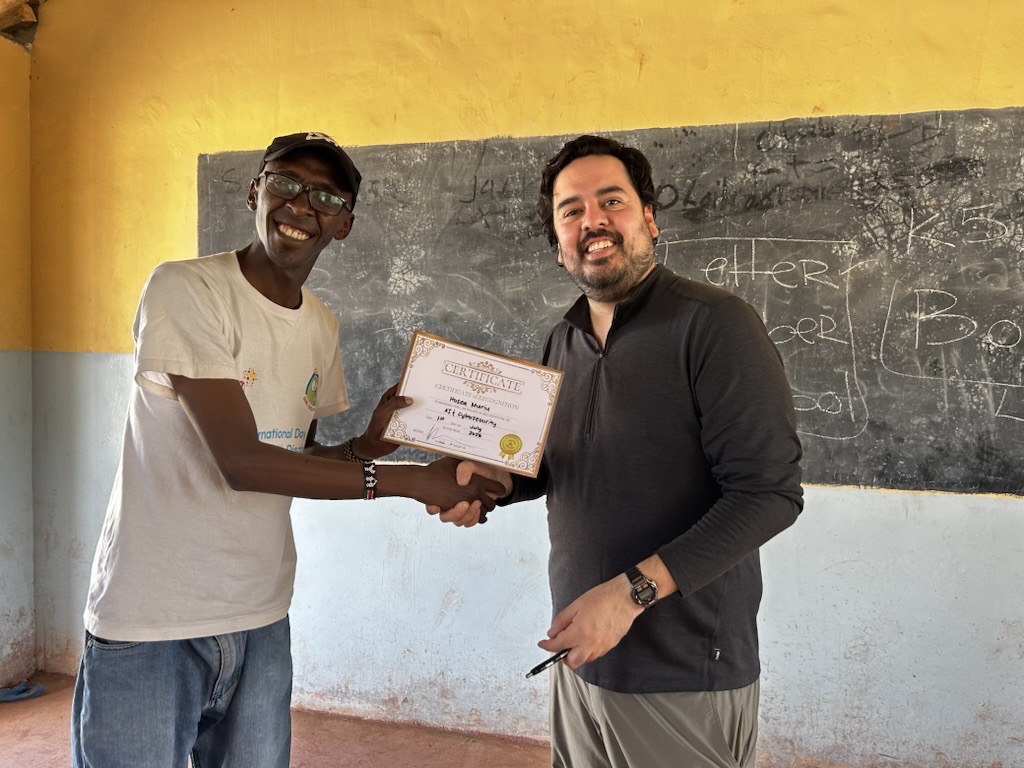
In 2025 I was invited by Alabaster International to teach AI and cybersecurity in rural communities across Kenya. The same plain-language approach I use in Las Vegas classrooms — strip the jargon, keep the rigor — held up in classrooms where students had never touched a formal cybersecurity curriculum. The photos above are from those sessions.
I am actively seeking more international speaking and teaching opportunities — especially in communities where the technical conversation usually arrives last.
Invite me to teach or speak abroadWhat organizers, program leads, and training managers ask before booking.
If a room leaves without something they can use tomorrow morning, the session failed — no matter how good the slides were.